The Overgrown Road of Laupāhoehoe

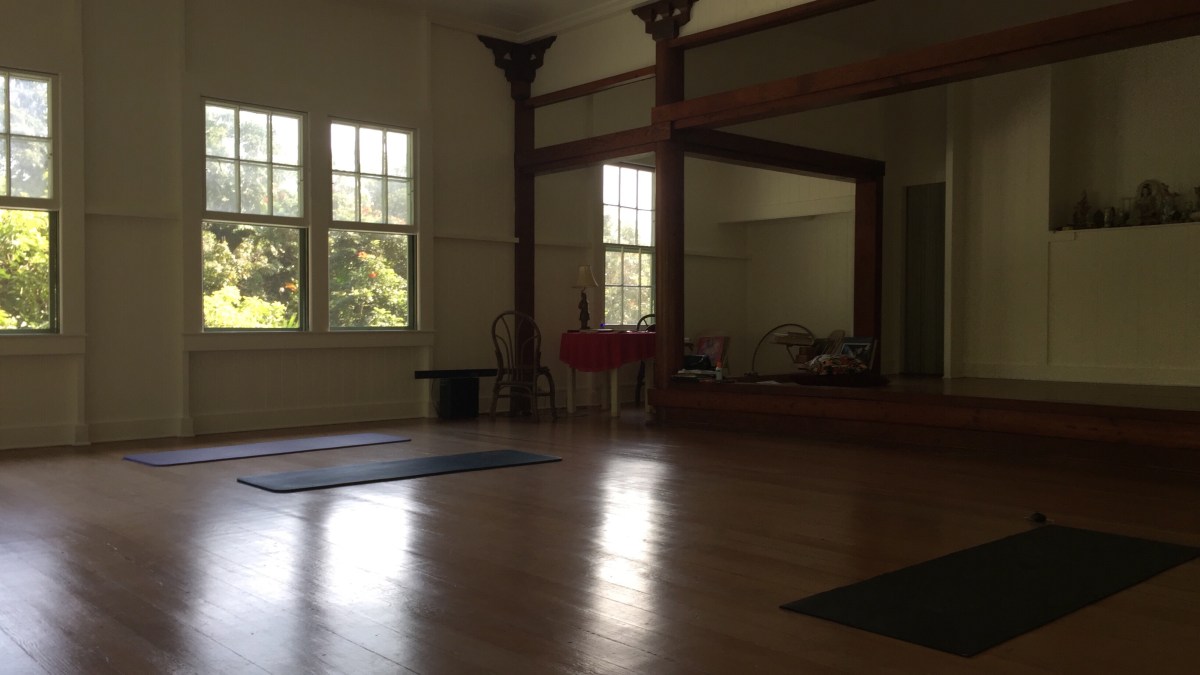
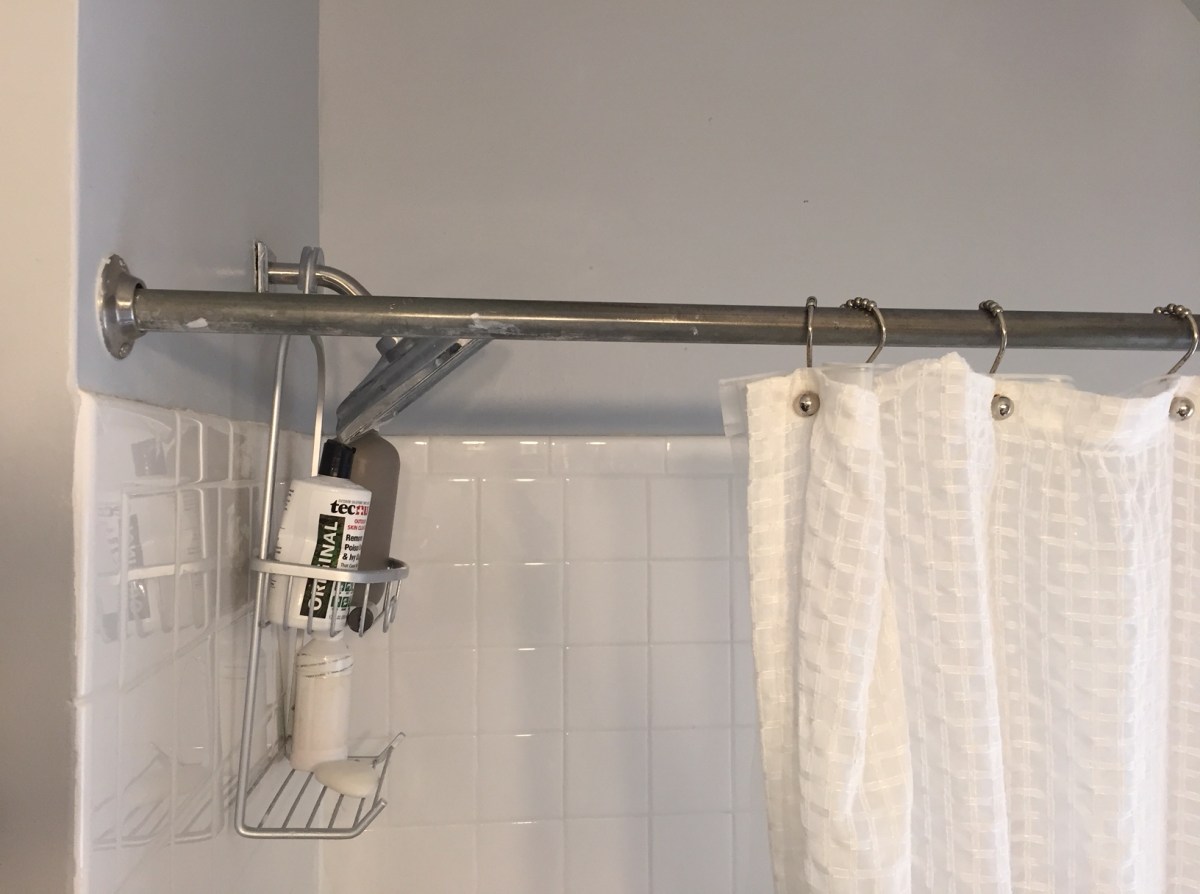
To live successfully with multiple sclerosis, you must become an artist of improvisation. You never know when (or how) your body is going to horrify you next. MS is, I dare say, a master class in mortality. Gentle reader, we are all on the same conveyor belt, heading for the same destination. Some of us just get to have a more challenging experience resisting the inertial pull as we dodge hostile takeovers on random locations throughout our nervous system.  We need to be flexible. We need yoga. And that is why, every morning of my stay at the Temple of My Dreams, I’d leave the downstairs living quarters and make my way up the stairs, and then up the ramp, to the second floor entrance to the yoga studio.
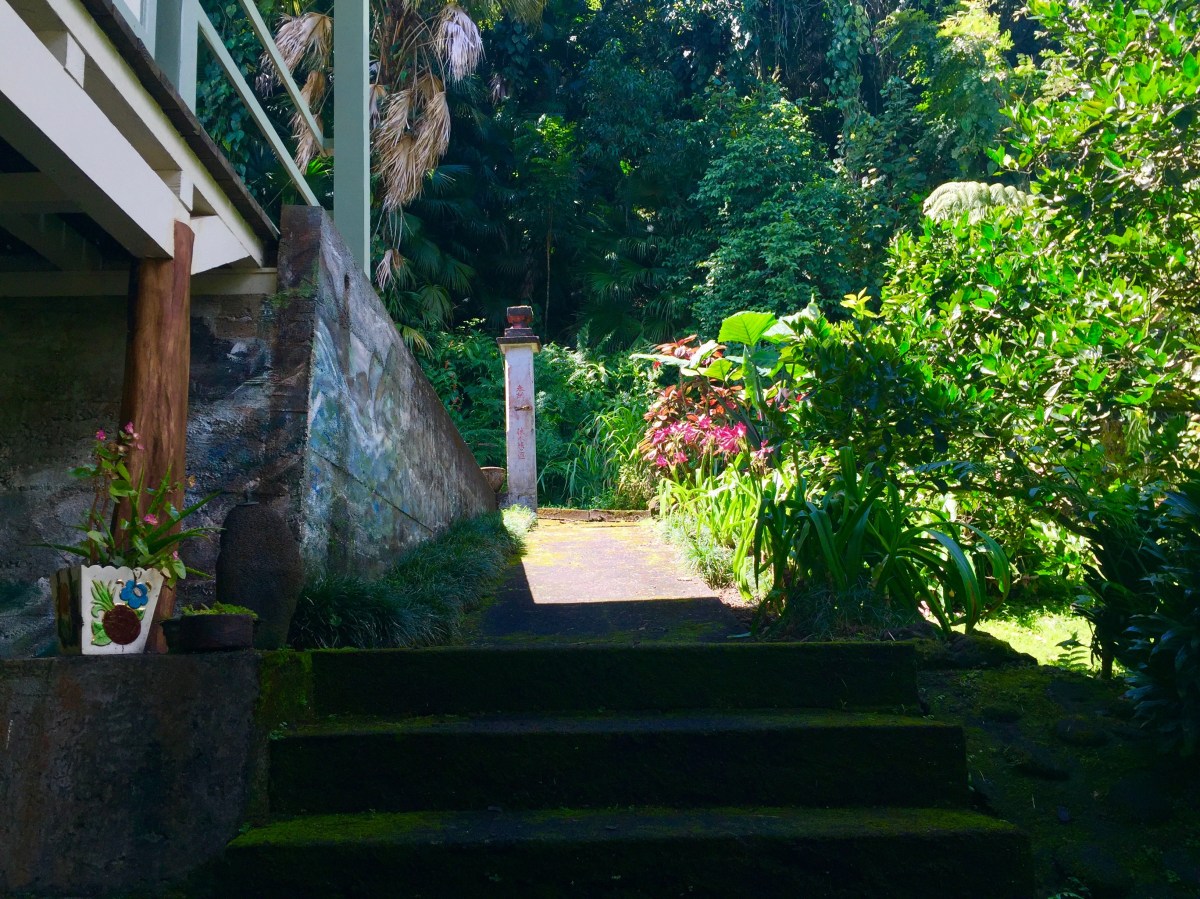
upstairscloser to temple

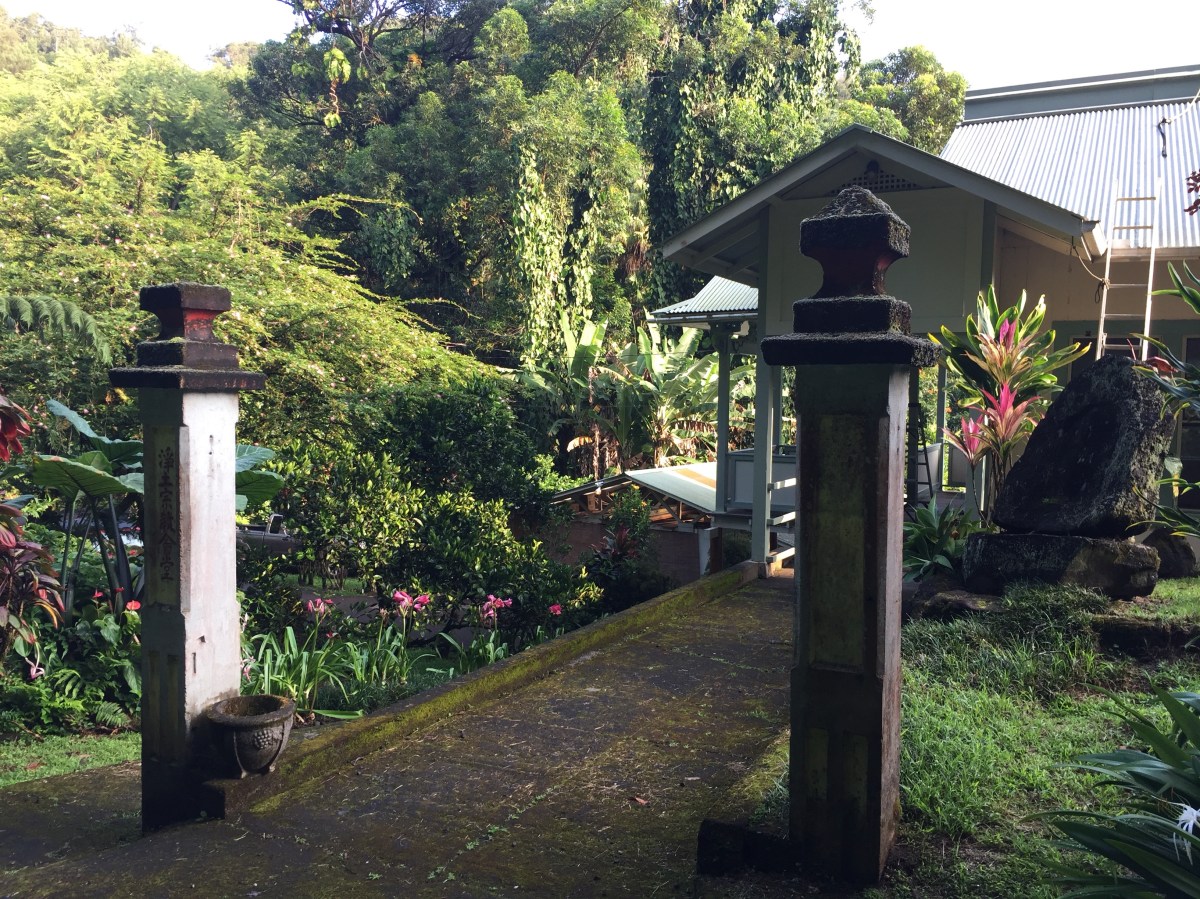
Once I reached the pillars, this is a glimpse of what I’d see to my left:
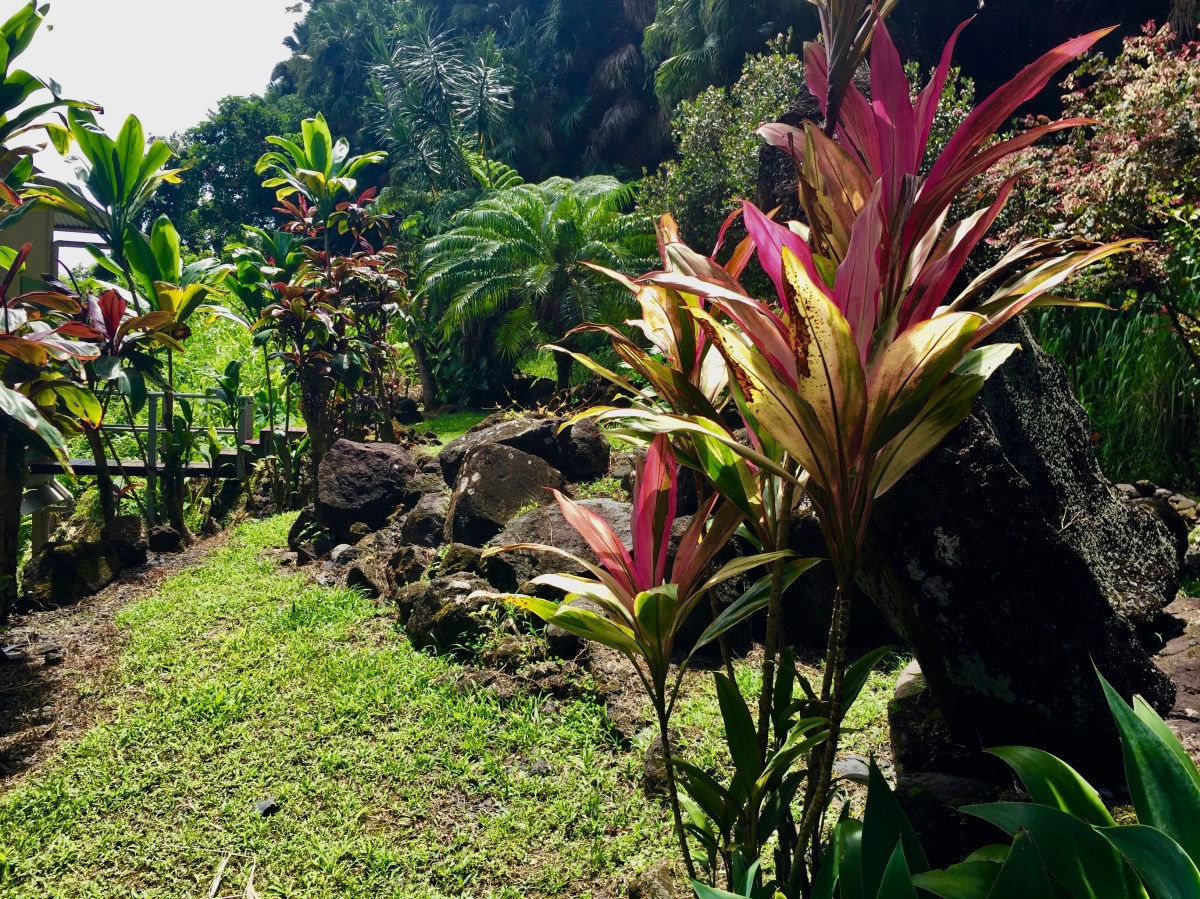
sideglance

I wish you could hear the ocean, as I did. Or the breezes. Or the birds. I would sometimes see glimpse a cat (or two) on my approach to the temple entrance on the second level.

cataround temple

The temple itself was inhabited by a black cat.

waiting cat

This cat is apparently very used to partnering in yoga.
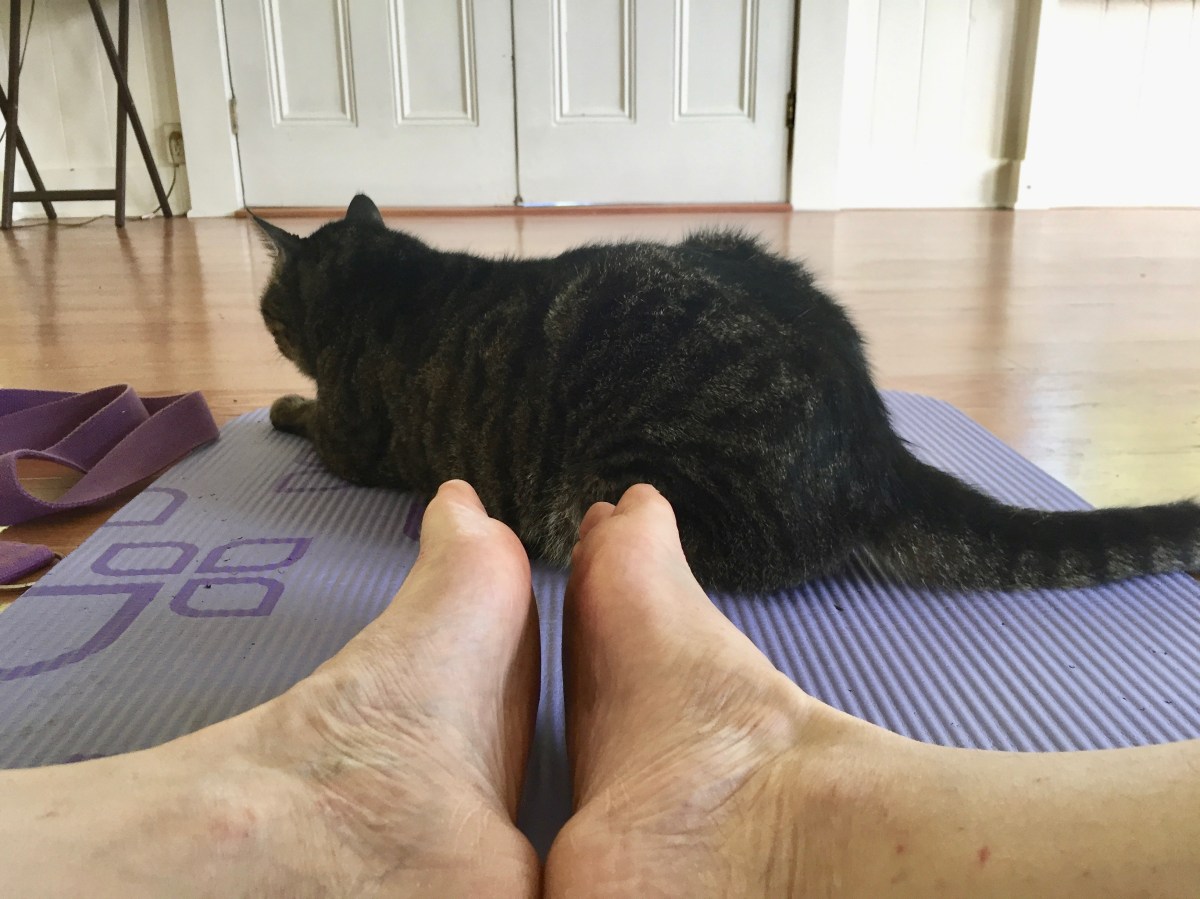
yogacatat fe

Ostensibly, the cat and I had the studio to ourselves. But if you’ve ever taught me yoga, or shared a pose with me, be assured, I snuck you in, too. The studio was spacious. And full.

There was a reason our family had chosen to visit The Big Island. When my husband graduated college, he and his dad celebrated with an epic two day climb / one day descent of the massive volcano, Mauna Loa. What better way to celebrate our son’s graduation from Vassar than to follow this tradition? Once we learned our son had signed on with a start-up in Beijing, it seemed only logical to give him a head start on the twelve hour time change with a ten day vacation in a time zone six hours closer to Beijing time. As parents, we’d do anything to ease a transition that is in many ways absolute. We knew our son would be starting a life far outside our areas of expertise. Our opportunities to ameliorate  his life challenges were drawing to a close.

During the planning phase, my husband kept bringing up the issue of what I would do during the Father/Son volcano expedition. Sorry, I am not the volcano vanquishing MS superhero you might find on an advertisement or some other blog. (Though I’d love to be!) I’m a fairly ecstatic swimmer/snorkeler,  but in the past I’ve gotten in some trouble overheating on the beach. My husband is accustomed to being my superhero. What would happen if I were to get stranded snorkeling while he was busy scaling the volcano with our son? His idea was to set me up in some luxury hotel for the haole (white) tourists on the dry side. No thank you! I wanted to choose my own adventure.

Meanwhile, the adventure my husband and son had chosen was going up in smoke—or more accurately—in vog. (Vog being the term for smoke that comes out of an active volcano.) As packages arrived at our house with backpacks and state of the art camping equipment, so daily updates arrived in our in-boxes on the steady eruption from Mauna Loa’s sister volcano, Kilauea. My husband kept expecting the eruption to end. But the goddess Pele didn’t seem to be running out of lava. As the date for our vacation grew nearer, he finally called the Park Service, and learned all the trails were closed. The men in my life would have to cancel their epic hike of Mauna Loa. No problem. They too, are flexible. They, too, have to live with MS. My husband found an achievable walk: an eight mile hike on Pu’u wa’awa’a. Achievable—for them, anyway. I hate to write that my eight mile hike days are gone forever. I’ll say this much: the day of the Father/Son hike, I would still have to find my own way.

But once we arrived at the AirBnB, I knew it had everything I needed for a blissful day on my own.  I could do yoga, at my pace. Break for writing. Break for meditating. Break for sitting on the lanai, soaking in the sights and sounds of the garden. Break for walking down to the beach. A five minute walk. An achievable walk. I’d have plenty to do while my husband and son took their achievable hike.

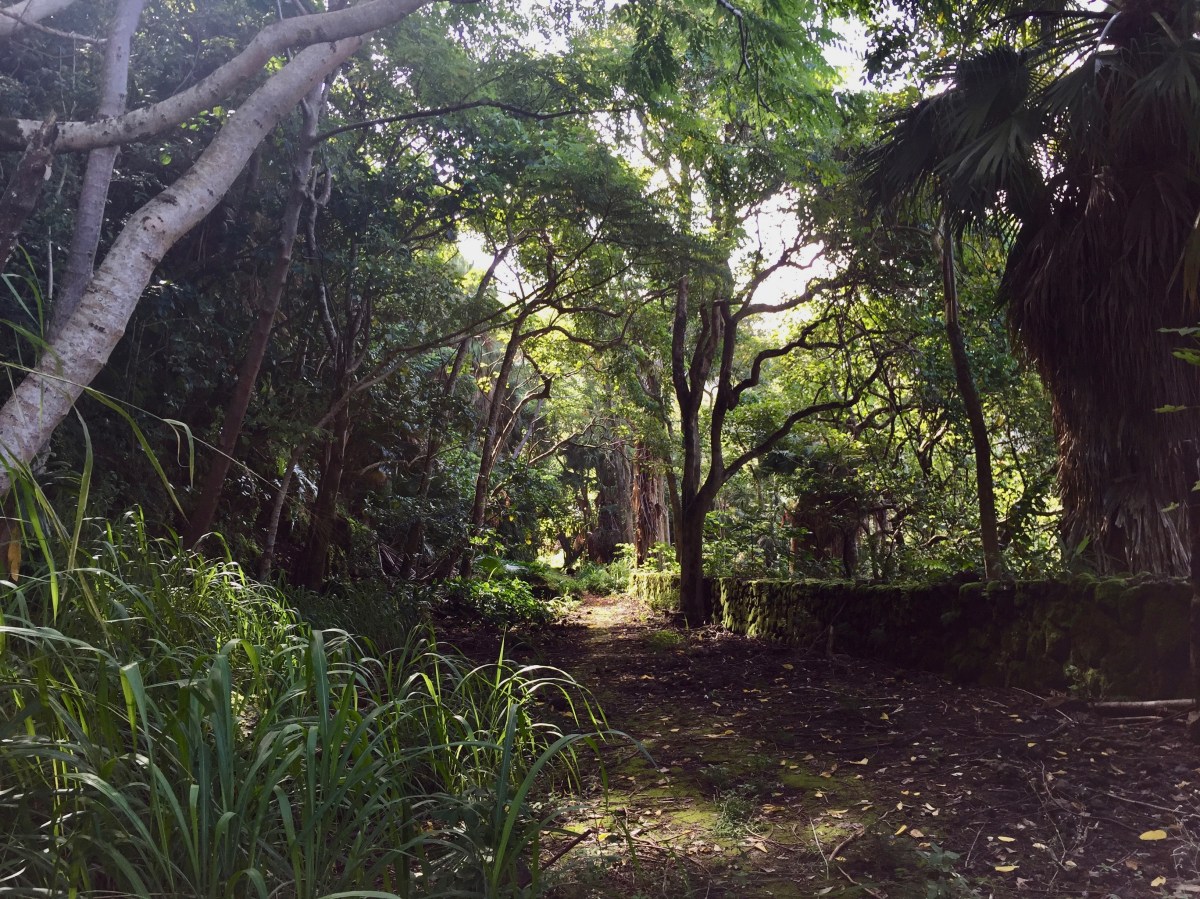
One morning, as I was leaving the yoga studio, I got a text from my husband. He’d taken a walk on an overgrown road that ran along the mountain side of the Jodo Temple. My son and I had refused to go with him. It looked like this:

oldroad

My husband texted that you could see the ocean from the road. The views were incredible. We should come! So we did. The views were incredible.

sticksonoldroad

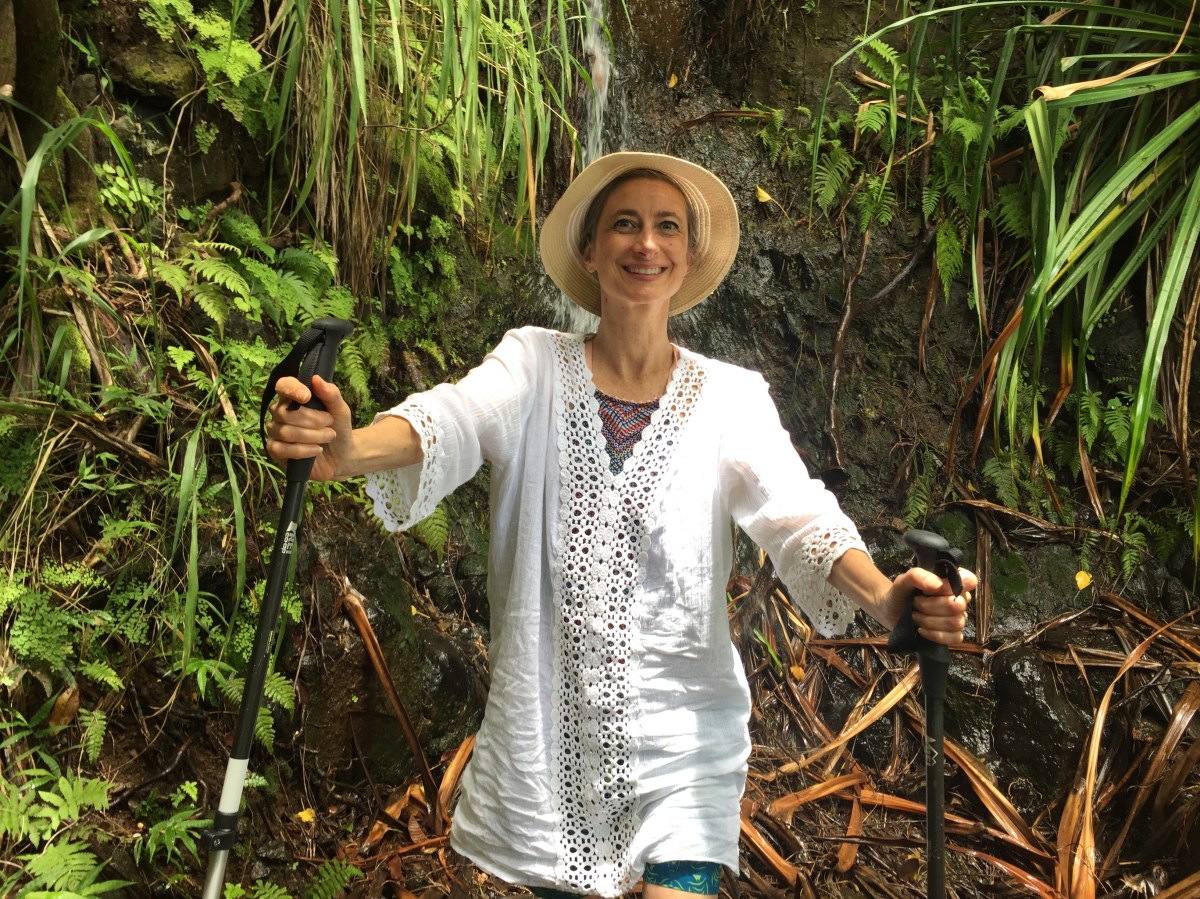
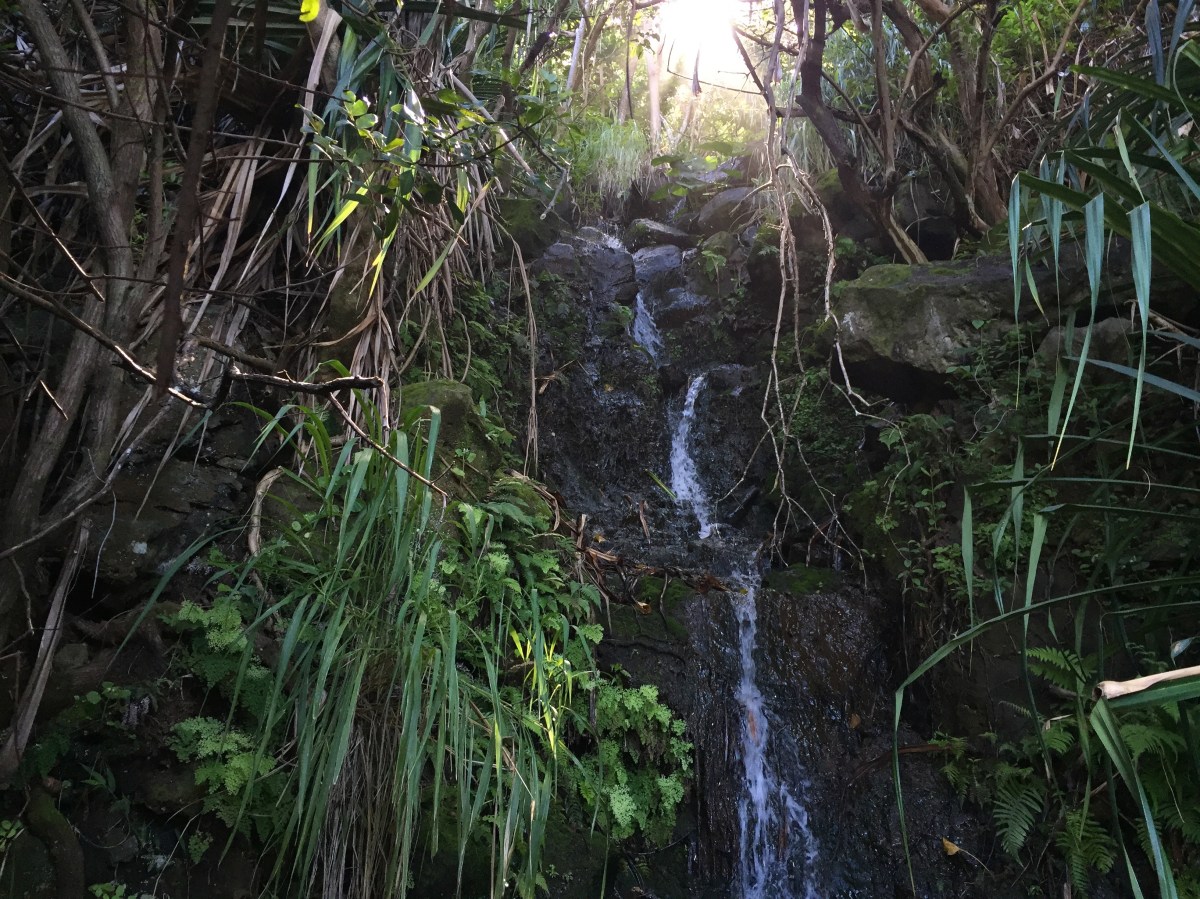
Sure, there was a landslide to scurry over. But everywhere: island foliage in all its exuberance. Over a low wall of carefully assembled lava rocks: a view of the ocean. And after an eighth of a mile or so, the unmistakable sound of a waterfall. The air got cooler. We found ourselves under a leaf canopy, staring up at this:
1

A little farther along, we stumbled on a second waterfall.

wfall2

My husband said, “All this for us? You’ve got your paved road in the wild. Our own private waterfalls.”
roadback

All that for us. For me. You’d better believe I returned on the day of the Father / Son hike. It was just the perfect mix of challenge and beauty and wild wild wonder. At just the right temperature. Mahalo, Pele. Thank you. It all worked out just right.
The Yoga Cat Will Have To Wait

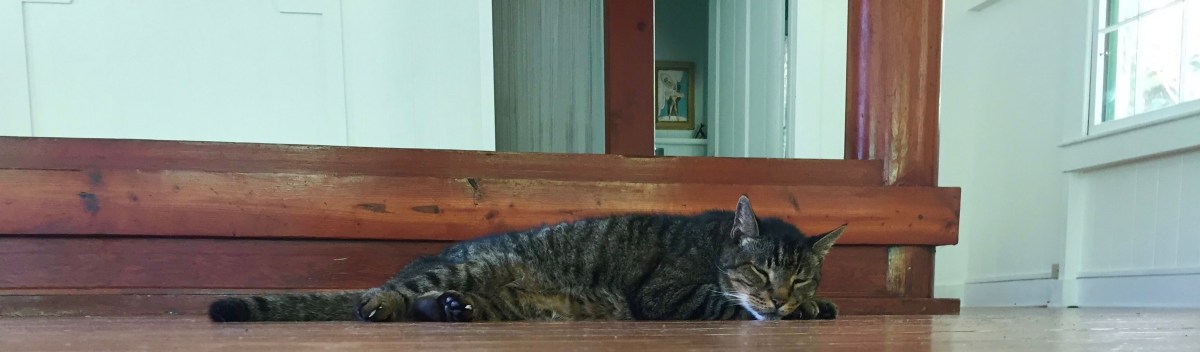
A few posts back, I had promised I’d take you with me to the yoga studio over the living quarters of the Temple of My Daydreams, so you could meet the yoga cat. But did I do that?

No. I did not. Instead I inserted a post about my WEGOhealth best blog nomination, and patted myself on the back. If you do enough yoga, you learn to pat yourself pretty far down your back. Now that I’m done congratulating myself, I’d like to congratulate two of my students.  You would not believe the extraordinary quality of writing I see every week from ordinary people here in Ohio, the most ordinary state in the United States of America. My workshops generate unforgettable stories that have mostly not yet reached an audience larger than five to eighteen readers, but absolutely should. Which is why I’ve been so pleased that in the last few weeks, two of my students have managed to receive broader recognition.

I usually don’t blog about my role as a teacher. For instance, my heart just burst with pride back in February, when a student of mine, a long time community theater performer and first time playwright, received a standing ovation at the Aronoff Center for the Arts after the staged reading of her hilarious play Humble Pie. Did I blog about the staged reading? No, I did not. This is an MS blog, and Barbara Timmon’s play has nothing to do with MS. But maybe, by not blogging about my student’s success, I was playing into the notion that my life is conscribed by my disease. It is not. From now on, when one of my students deserve a pat on the back, I’m going to go ahead and pat.

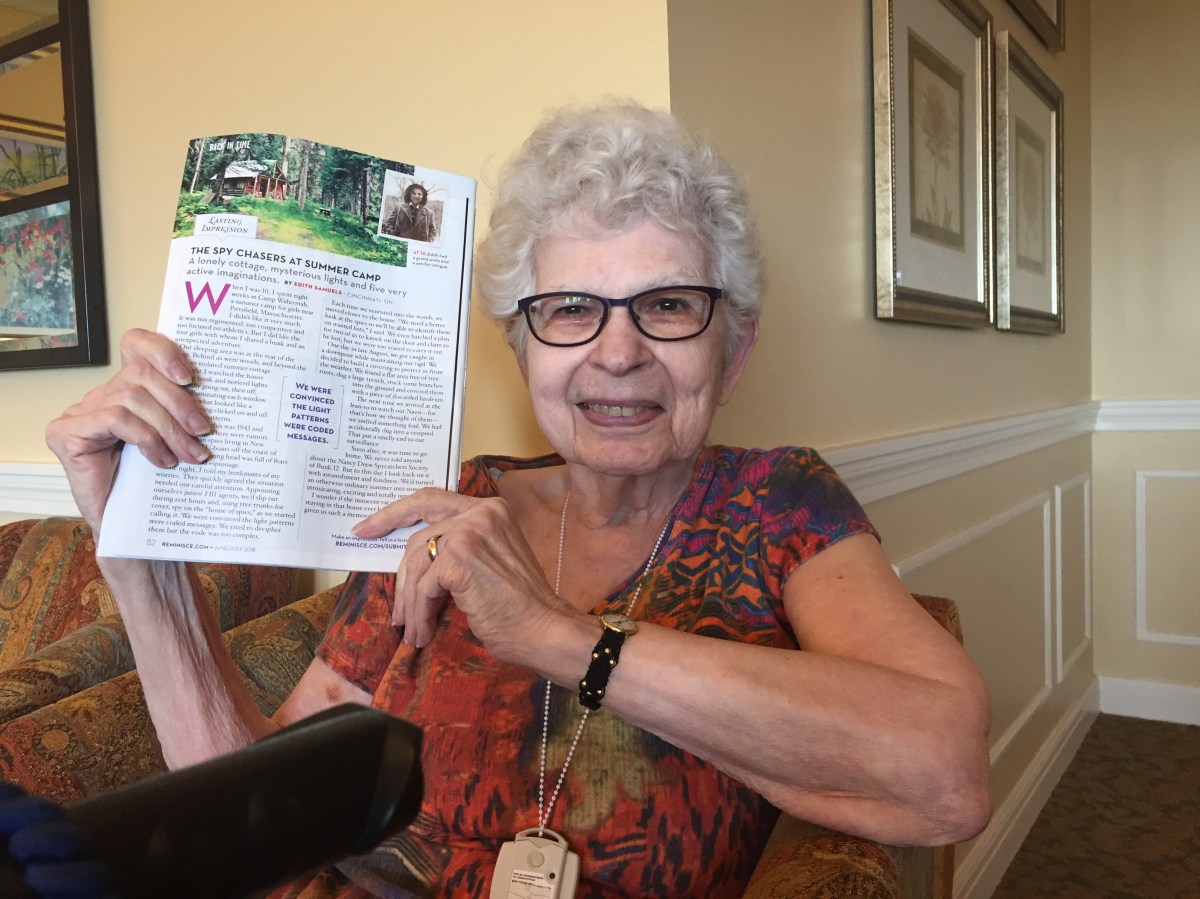
My first pat on the back goes to Edith Samuels, a graduate of Vassar College. For years, I’ve been trying to find a publication for her deeply moving poetry series about a love that has persisted through Alzheimers. I was beyond thrilled when Reminisce Magazine contacted me with the acceptance of her story, The Spy Catchers, which is about her truncated surveillance career back in 1942.

edithreminisce

If you’re anything like me, you pass a good deal of  quality time in waiting rooms, and might easily locate the summer edition of Reminisce Magazine wedged between Neurology Now and the latest issue from AARP. You’ll find you have plenty of time to read Edith’s adventures as you wait for the sexy drug rep to stop batting her eyelashes at your neurologist. Those of you who spend your summer hours outside of medical facilities can treat yourself by listening to the author read her story here:


My second pat on the back goes to the ruthlessly honest storyteller Maria Frangakis, who first took a writing workshop with me  maybe nineteen years ago at the  Tabor Arts Center in Connecticut. Maria’s unseemly intellect and ambition earned her the nickname, La Mala in her hometown in Mexico, and has earned her an MA and an MBA here in the United States, where she has created a beautiful family as well as her own successful Biotech consulting company.

MariaF

You can read Maria’s unforgettable short story, Not So Great Expectations, by following this link to Typehouse Literary Magazine.

And while I’m doing all this promotion, I might as well prompt you, gentle reader, to buy Issue 30 of the literary magazine 34th Parallel, which features a short story of mine, Chorus of Exes. 

Those are my pats on the back. My next entry, I promise, will be about the cat in the yoga studio. It might even be about MS. (This is an MS blog, after all.) I know this much about cats: it’s not a good idea to keep a cat waiting. And I know this much about MS: I’ll keep MS waiting just as long as I can.

IMG_1306

IMG_1307

If you are a fan of the blog, please consider following this link to endorse me as a “Patient Leader” in the WEGOHealth Awards. WEGOHealth is the world’s largest network of Patient Leaders, working across virtually all health conditions and topics. I would love the opportunity to broaden my reach even further. Help me out if you agree!

WEGOHealth

I’ve been nominated for “Best Blog” at the #WEGOHealthAwards! These awards seek to recognize Patient Leaders who are making an impact with their advocacy. Learn more & vote for me today.

Like any writer, I’m a big believer in the power of story. Our culture right now is experiencing a bit of churn as those of us who have been historically overlooked, vilified, and ignored are getting out there and telling our own stories, without much invitation or permission.

I had a lot of fun at The Art Academy of Cincinnati last semester teaching Don’t Call Us Dead, a powerful book of poetry by Black, queer poet Danez Smith; Get Out, the subversive screenplay by Jordan Peele; and the Pulitzer Prize winning novel The Sympathizer, which was written by Viet Thanh Ngyen, an author who’d endured being separated from his parents as a child immigrant. (I know, I know: all men! The semester before I’d featured all women, so that’s the way the see-saw tipped.) As always, I’d urged my students to tell their own stories, and to share the stories that spoke the strongest to them.

In future classes, I would love to feature brilliant disabled poets, screenwriters, and novelists. I know they must be out there. (And maybe slowly getting published?) If you have any suggestions, add to comments.

Let’s lift each other up.

UPDATE: I just found my next poet, WordPress author Susan Richardson. https://burninghousepress.com/2018/06/23/3-poems-by-susan-richardson/comment-page-1/#comment-963

Thirty Years of Living With Multiple Sclerosis Hasn’t Been A Walk In the Park.

Saturday, I walked through four parks. I did not walk alone, or unaided. My husband and son were there to give me an arm when necessary. My REI poles gave me the superpower of two added appendages.

When I first got my diagnosis, my fear of disability was entangled in a fear of losing access to wild places. I didn’t want my travels circumscribed by smooth asphalt. Give me rocks, sand, dirt trails. Saturday, all four mediums were at my disposal as we explored the Big Island of Hawaii.

My husband and I greeted the sunrise at Laupāhoehoe Point, the rocky shore where his grandfather first arrived from China.

It felt right to be there. Our son has accepted a two year position in Beijing. In a few days, he’ll be flying to his new job / ancestral home.

After visiting the point, we returned to our lovely AirBnb, a renovated temple, where our son could justify sleeping in as his preparation for Beijing time.

I unwound with some yoga.

The ocean breezes skimmed across the room and cooled my skin.

Then whole family set out for Waipio Falls.

The falls were stunning. But I forgot to take a picture. I was a bit rattled.

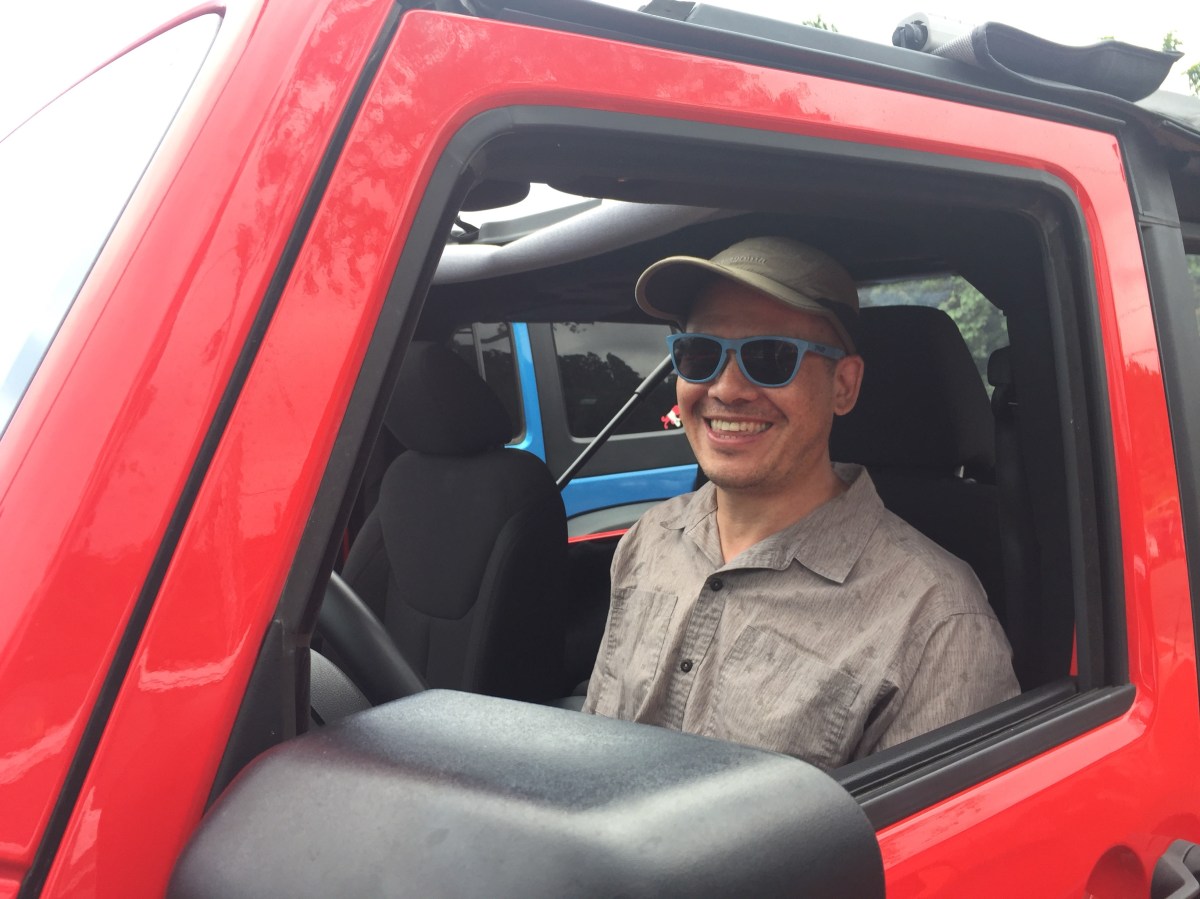
My husband was very keen on driving down this, the steepest slope on The Big Island, to get us to the falls. He’d rented a Jeep for the four wheel drive.

I’d imagined he’d rented the Jeep because his poor disabled wife couldn’t make it down this long perilous incline on foot. But no. Driving down a one and a half lane mountain road at 70 degree incline turned out to be his idea of fun. The road was so narrow, one vehicle had to fold its side view mirror to passu us. We made it through.

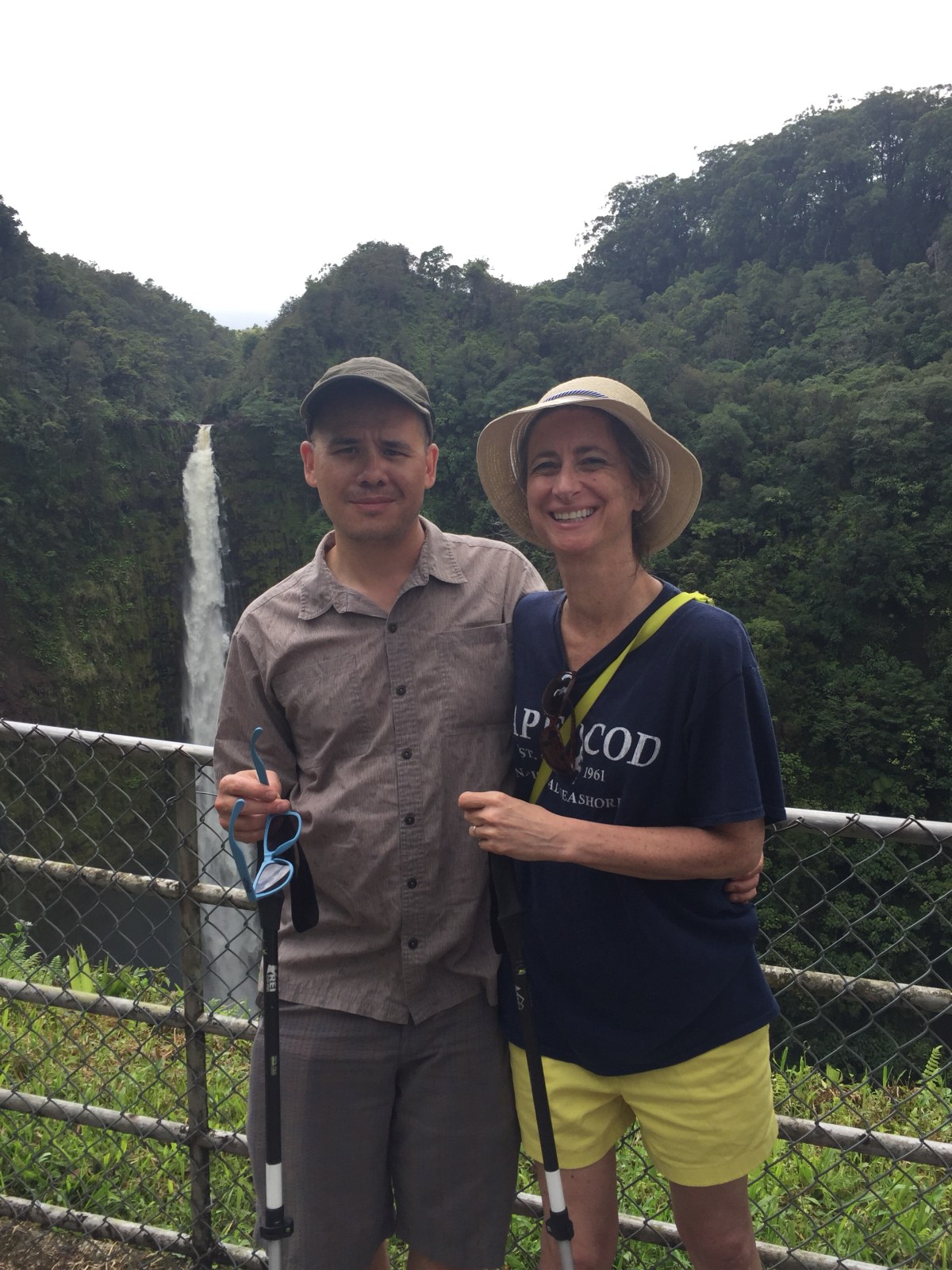
Our next stop was Akaka Falls.

The windy paved walkway around the falls gave us easy access to breathtaking views.

We wrapped up the day strolling through a lovely park in downtown Hilo.

I wish someone could have told me when I was first diagnosed that my days of access to beauty and wonder were far from over.

Flummoxed (Part 2 of ?)

I find it super uncomfortable to read articles in scientific journals. Even articles about MS. Even articles about MS illustrated with lots of pretty graphs. Maybe…especially articles about MS. These are articles I have to understand as though my life depended on it. Because it does.

You know how some people publicly (and most people privately) grouse about how higher math is irrelevant for most of us after we get out of school—so why make students suffer? Well, I wish I’d paid more attention when I was taught statistics. Turns out, I need to understand them in real life. I wish I’d had a semester or so learning to become a fine print detective, that the teacher had made terms like  “de facto” feel like shiny keys to hidden treasures. I wish I’d not learned to gloss over any text in the form of an equation like this one:

IDPDrugversusPlacebo=100%(1(1IDPDrugversusIFNβ100)(1IDPIFNβversusPlacebo100)).

Because no one is going to tell me the stuff I am learning by reading research articles in Frontiers in Neurology. Stuff like: “Higher efficacy treatments exert their benefit over lower efficacy treatments only during early stages of MS, and, after age 53, the model suggests that there is no predicted benefit to receiving immunomodulatory DMTs (Disease Modifying Treatments) for the average MS patient.”

I admit, I haven’t been going to enough MS Society events. But all too many of them are paid for by pharmaceutical companies, who may have a conflict with informing you that, after you reach a certain age,  their drugs are no longer particularly useful. (Not to mention, some of their drugs are not particularly useful at any age.) I don’t know about you, but I know an awful lot of people over the age of 53 who are taking a DMT (Disease Modifying Treatment.) These treatments can cost in excess of $7k per month. Very few of these people seem particularly well. More than a few complain of side effects from their medications. What would they think about this article? Have they been enduring pills/injections/infusions that are doing them more harm than good? Have I?

I’m not going to be too hard on myself for having trouble navigating the facts as presented. At one point, I’d sent a link to my son, who majors in math and economics at Vassar. My heart leapt when he messaged me back. Then I saw he was messaging with a question, not an answer: “Does this thing have cliff notes?”

When Dr. Z returns my call, I am stuck on one particular paragraph, which distinguishes higher efficiency drugs from lower efficiency drugs. I notice the drug I’ve lost access to, Zinbryta, is classified as a higher efficiency drug. Whereas Tecfidera, the drug that is causing my skin to redden and prickle, is classified as a lower efficiency drug. I’ve downgraded! Nobody likes a downgrade. And nobody likes their skin to prickle and burn.

IMG_0124

Dr. Z tells me he’d gotten the picture my friend Monica had taken of my angry skin. I ask him if it looks like an allergic reaction. The fine print that came with the drug was very clear on one thing: “Do not use Tecfidera if you have had an allergic reaction, such as welts, hives…”

I want him to use the word, “hives.” Instead he asks, “Did you take aspirin thirty minutes before you took the medication?”

“Like you told me?”

“Yes.”

“No.” I hadn’t wanted to mask the effect of the drug. I’d wanted to know exactly what my body thought of it. The reaction had been fairly unambiguous, I thought. Didn’t he?

He says rash is a common side effect, one that would generally recede after the first few weeks, or could be averted entirely if I were to take an aspirin beforehand.

I counter that even if this was a side effect, and not an allergic reaction, I just wasn’t sure the side-effect of this drug could ever outweigh the benefits of a low-efficacy therapy.

He says, “You’re talking about that paper again. Let’s remember that you may not need a high efficacy drug at this point in your disease process. You might be past the inflammatory phase of your disease. But you are not out of the woods yet. I have patients in their seventies and eighties getting relapses. I wouldn’t want that to happen to you.”

I don’t want that to happen to me, either. I promise I would give Tecfidera another chance. I would try taking the aspirin 30 minutes before the drug, as he had told me. And wait and see.


Flummoxed (part 1 of ?)

I took my first Tecfidera pill one week ago after dinner. About three hours later, I sat up in bed next to my soundly sleeping husband: it felt like I was wearing a prickly cap of molten lava. I sat there very quietly for a hours, a red-hot target,  wondering what to do.

Dr. Z did say that “facial flushing” was a common side effect of the drug. He had suggested I take an aspirin thirty minutes before taking Tecfidera. But had I done that? No. I had a rationale:  I always plan on not getting the listed side effects. I am as suggestible as the next person, which is to say, wildly suggestible. I try to compensate by kind of not paying attention to the fine print until I have to.  I have enough going on with my health without taking on any unnecessary burden of invented symptoms. By this semi-logic, taking an aspirin would have been given too much credence to a possibility of a side effect I’d rather not invent. Alas, I got the side effect anyway.

And then some.

As I sat there, sweating, burning, I thought, This cannot be good. Nothing feeds the demon of multiple sclerosis like elevated body heat. It makes symptoms leap into action like bacon grease on skillet. I realized I hadn’t even asked about the mechanisms behind how the drug worked. What if it didn’t work for me at all?

I was aware—and you may as well be aware, too—that MS drugs work less and less effectively as a patient gets older. I used to suspect that the daclizumab which had worked for me so well for me as an infusion in my thirties was simply less effective in the Zinbryta formulation I injected in my forties and at age fifty. But no. As it turns out, my cells were getting less effective. Here’s a link to a paper that illustrates it all beautifully. The paper is an easy read if you are fluent in statistical and neurological terms. Which I am not. But even I can read a graph with a steady downward angle and notice there aren’t even many people my age in MS drug studies to begin with. And when we are present, we make the results look a lot less spectacular. Long story short: If you want an MS medication to work at its best, be younger.

I wasn’t getting any younger. The new pharmaceutical options invented during my twelve years on daclizumab were turning out to be mostly inaccessible to me. My elevated antigen, and the associated higher risk of potentially fatal PML,  eliminated many of the new high performing drugs.  My elevated cancer risk eliminated Ocrevus, the only drug with promising results for people with progressing multiple sclerosis. Yes—I’d learned in an email from Dr. Bielekova that I am progressing. She’d written:

We also know much more about FDA-approved MS drugs in general then we knew when we met: these drugs are not a cure. Their efficacy is highest when they are started very early on in MS, but declines afterwards. They do not penetrate well into the brain tissue, where the inflammation hides. This type of inflammation we call “compartmentalized inflammation” and it is not inhibited by current MS drugs. You have some of this compartmentalized inflammation.

It had been validating to read that. I’d known it was getting more difficult to function, even as the MRI’s failed to reveal any new lesions. I’d known…deep in my cells, I guess, that those MRI’s weren’t telling the whole story.

And I knew, as I sat there and burned, that Tecfidera wasn’t going to do a thing for the compartmentalized inflammation caused by this latter phase of MS. At best, it would fend off the cruel, lesion producing exacerbations of my earlier phase of MS. It has been years since I’ve had to contend with one of those. But as Dr. Z put it, I was “not out of the woods yet.”

I’d been, briefly, on Dr. Bielekova’s trial of drugs that could possibly address the compartmentalized inflammation, but I’d had to withdraw from it once Zinbryta got pulled from the market. I could not return to the NIH (National Institutes of Health) until I started a new medical regimen. As the sky lightened, and the burning receded, I was thinking Tecfidera would not be the drug for me.

How did I wind up dutifully taking my next dose of Tecfidera that morning after breakfast? What persuaded me to give the drug another chance? I don’t believe in giving drugs a chance—not if they come with side effects. Back when Avonex came on the market in the ’90’s, I promised my then-neurologist I would give the drug a full year. I stopped breastfeeding my son to go on that drug. Those weekly Avonex injections gave me “flu-like symptoms” of fever and bone ache that lasted half the week. For my troubles, I got two severe MS exacerbations before that first year was through. I quit after the second exacerbation. The bone ache plagued me for years afterward. I’d felt like such a sucker.

Nothing happened immediately  after I took the pill. I played with my dogs, pulled some weeds, and went to yoga. My friend Monica and I were halfway through lunch when I asked her if my face was getting a little flushed. She said, “Now that you mention it, you’re bright red.” As we were leaving, she asked if I thought I could drive home safely. I said I’d be fine. But once I sat in the car, I looked down and saw my legs were red. I  ran across the parking lot, rapped on her car window and asked for a hug. She was out of her car in a flash.

Monica noticed my legs were “a funny pattern.” I will spare you the photograph she took. It matched the photo Google gave me when I typed in “hives.” I’d remembered the information packet explicitly said not to use Tecfidera if you have an allergic reaction. This looked like an allergic reaction to us. Monica insisted I call our neurologist, insisted on remaining by my side. She stayed with me as I left all the information with the clinic. Then I went home, and went on a research tear. By the time Dr. Z. called me, maybe a scant hour later, I was toggling between screens on my computer: my medical records,  the Tecfidera Facebook page, the Important Safety Information page on the drug site,  two challenging articles in the Frontiers in Neurology site. I was overwhelmed. Flummoxed.

Was what I had a side effect, or an allergic reaction? And did it really matter? My body didn’t like this drug. Twenty plus years of yoga and even more years of multiple sclerosis, had taught me to listen to my body.  Yet there was too much at stake to respond with mere intuition. I was eager to listen to my neurologist.


Go back

Your message has been sent

Warning
Warning
Warning
Warning

Warning.

Enter your email address to subscribe to this blog and receive notifications of new posts by email.

just my luck

A New Chapter Begins

Before I took my first dose of my new MS medication, my husband thanked me for making a wonderful soup. “If you die, you’re leaving on a high note.”

If anyone wants to snatch a loyal husband after I go, you should know the wonderful soup has a base of two cups of last night’s leftover fish soup from the local Chinese restaurant, one diced green onion, one cup of  home made bone broth, one can of full fat coconut milk, one cup of assorted frozen Costco fish, one teaspoon of pulverized ginger, a sprinkle of turmeric, half a cup of dulse,  and one other secret ingredient I won’t reveal because my husband said it was “comforting.” I want him to miss me just a little.

And I don’t want him to have to miss me quite yet.

To that end, I picked one of the MS medications least likely to provoke a fatal case of progressive mulifocal leukoencephalopathy (PML) because I love our life together very much. (That same life I once found so cursed by disease way back when I was objectively far less disabled than I am today.)

My local neurologist, Dr. Z., said that this is the drug he would choose for himself or his wife. There’s no stronger recommendation than that.

I am giving Tecfidera a shot. Thankfully, it comes in pill form.

Go back

Your message has been sent

Warning
Warning
Warning
Warning

Warning.

Enter your email address to subscribe to this blog and receive notifications of new posts by email.

just my luck

No Cancer.

I met with my surgeon yesterday. She inspected the pretty scar she’d left me, and we agreed that it was healing very nicely. She told me those suspicious looking cells she’d extracted had turned out negative for carcinoma.
I mistook this for good news. No cancer. No worries. Right?
Wrong. The surgeon asked me if I wanted to know the results of my Tyrer-Cuzick Breast Cancer Risk Evaluation, then ducked out of the examining room before I had the chance to answer. She returned with a four page document that concluded with results she and I read very differently.
She’s the surgeon. She’s got the medical degree. I’m the patient. I’ve got the MFA. I’ve never been good at math.
The results were as follows (capitalization theirs):
“Ten Year Risk:
This woman’s Risk (at age 50): 11.0%
Average women (at age 50): 2.7%
Lifetime Risk:
This woman’s Risk (to age 85) 39.9%
Average woman (to age 85) 11.4%”

Maybe I’m a glass-is-half full person, but even if I wasn’t: the ten year prognosis glass is 89% full. That’s pretty darn full.
The surgeon immediately offered me a medication I could take to fill that glass to 100%—a medication, she swiftly added, that could only be taken for five years.
“No medication,” I said. “I take enough medications.”
“If you want to reduce your risk to zero percent,” she offered, “you can get a double mastectomy.”
I didn’t say, “And lose that pretty scar you left me?”
I didn’t roll my eyes. For while I did think her suggestion was crazy, I understood she was coming from a crazy place, witnessing women being brave because they have to be, as they fight for their lives, and all-too-often lose. I took it as a kindness, really, that she didn’t want me to join their ranks. I don’t think she’s an opportunist, trying to make money from some ounces of my flesh. I went along and booked my appointment for another mammogram in six months.
And then I went about my life. I took my “Freedom from Falls” class in the morning. I ran the writer’s workshop at the Senior Living Center in the afternoon. I told the writers my odds. These writers are in their seventies, eighties and nineties. They’ve seen a lot of life. They’ve seen a lot of death. They all agreed with me: those odds looked pretty darn good. I drove home. I did not update my neurologist. I did not update the NIH. I did not update my blog.
I wanted one day of those numbers looking pretty darn good.
If I go ahead with my plan to switch to Ocrevus for my MS medication, those numbers would go up. There’s a bullet point on the Ocrevus site under “WARNINGS AND PRECAUTIONS”
“• Malignancies: An increased risk of malignancy, including breast cancer, may exist with OCREVUS”
What would my surgeon’s Tyrer-Cuzick Tool have to say about Ocrevus? What will my neurologist have to say?

Go back

Your message has been sent

Warning
Warning
Warning
Warning

Warning.

Enter your email address to subscribe to this blog and receive notifications of new posts by email.

Lab Rat Plot Twist: Zinbryta Pulled Off The Market

I was on the line at the post office when one of my local MS doctors, Sandra Parawira, called to give me the news before I heard about it through the media.
Zinbryta, the MS drug that has staved off my MS attacks for the last 12 years, had just been pulled off the market. A few Zinbryta patients in Germany, and one in Spain, were found to have developed encephalitis. Sandra urged me to come into the office to visit with her on Wednesday. If her concerned tone of voice hadn’t done enough to convey the urgency of the situation, the immediacy of my next appointment in her busy practice surely did.
But was I worried? Not particularly. I have NPR to thank. On my drive to the post office, I’d been listening to an interview with a medical researcher on Science Friday. The researcher, Dr. Kang, was promoting a new book about “cures” throughout history that had done more harm than good. As I listened to Dr. Kang recount Marie Curie’s fondness for the radium which would later kill her, I’d idly wondered which of the drugs or supplements I was currently taking would later be exposed as a toxin. Five minutes later, I got the call that the drug I’ve credited for giving me my life back has been taken off the shelf.
While I have my doubts that a drug I’ve taken safely for 12 years was about to give me encephalitis, I am still seeing this change as an opportunity. Many new players have entered the MS landscape in the 12 years I’ve been on Zinbryta. Perhaps the drug I’m assigned next will improve my life as drastically as this one did.

Go back

Your message has been sent

Warning
Warning
Warning
Warning

Warning.

Enter your email address to subscribe to this blog and receive notifications of new posts by email.

Disclaimer

Gentle Reader,

Never forget that this blogger’s brain has shrunk to the size of a side dish of cauliflower. Lectorum admonere potent. Or, Reader, be warned. (Don’t feel insecure, bigger brained one, if you didn’t know the Latin. I didn’t, either, I had to look it up.)


Go back

Your message has been sent

Warning
Warning
Warning
Warning

Warning.


Enter your email address to subscribe to this blog and receive notifications of new posts by email.